The EES for Ukrainians: what has changed at the EU border
Since 10 April, the EES has been fully operational. Passport stamps have been scrapped — instead, the border guard enters the details of your trip into a shared European Union database. These changes affect Ukrainians directly: Ukrainians enter the EU as third-country nationals and therefore go through the same procedure as all other travellers.
What the EES is and who it applies to
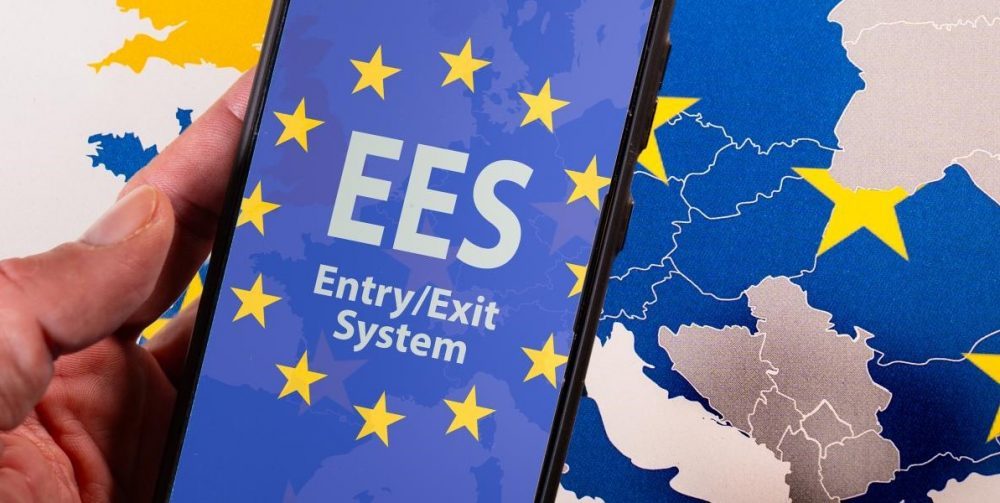
EES stands for Entry/Exit System — a system that records entries into and exits from the EU. Every crossing of the EU’s external border is logged in this database. Before the system was launched, this job was done by the passport stamp: border guards used stamps to count the days spent in the Schengen area. Now the EES does the counting, and that is the main change for third-country nationals.
Registration is mandatory for short stays — up to 90 days in any 180-day period. This covers ordinary tourist trips, visits to friends and family, and business trips made visa-free within the Schengen area. Let’s address the most common worry straight away: visa-free travel for Ukrainian citizens remains in place. What has changed is how entries are recorded, not the right to enter the EU.
The new rules apply in all EU countries except Ireland and Cyprus, as well as in four non-EU countries that are part of Schengen: Iceland, Liechtenstein, Norway and Switzerland. All of these countries follow one common standard rather than their own separate rules.
Why the EU introduced the EES
- tackling illegal migration — the system shows who has stayed longer than permitted;
- detecting forged documents: biometrics are linked to the person, not to a piece of paper;
- enforcing the ‘90 days in any 180’ rule, which used to be calculated by hand from stamps;
- faster checks for travellers who are already in the system — their data is entered only once.
For travellers from Ukraine, this means the EES sees their full entry history. Any mistake in counting days is spotted immediately, but law-abiding Ukrainians will face fewer questions.
When the system went live
There are actually two dates, and they are often confused.
- 12 October 2025 — phased launch. At first, registration took place only at some border crossing points.
- From 10 April 2026 — full operation. Since then, biometrics have been collected at the external borders of all participating countries, and passport stamps are a thing of the past.
If crossing the border in winter felt the same as always, that’s normal: the checkpoint may still have been working the old way. Since spring, that difference no longer exists.
What data is collected at the border
On your first entry into the EU after the launch, the border guard scans your passport, photographs your face and takes your fingerprints. Providing biometric data is mandatory, as otherwise the crossing cannot be recorded. After that, the data works for you: you won’t need to repeat anything.
What exactly the system stores:
- personal details from your document — first name, surname, date of birth;
- the date and place of each entry into the country;
- your facial image and fingerprints;
- information about any refusal of entry, if applicable.
The data will be kept for three to five years — sources cite different periods, and in some cases the retention period may differ. Information in the system can be accessed by the border and law enforcement authorities of the countries that use the EES.
Crossing the border with the EES
The first check takes the longest, as your biometrics have to be recorded from scratch. After that it gets easier — your data is already in the system, so the next check will be quicker. Where the border crossing point has self-service kiosks, part of the procedure can be completed faster.
The same requirements apply to all modes of transport: road, rail, air and sea border crossings all work to a single standard. For bus and minibus passengers, this means one practical thing — the time spent at the border depends not only on the queue but also on how many first-time travellers there are. Allow extra time, especially on popular routes and at weekends.
You cannot refuse to provide biometrics: if you do, you will be refused entry. Without them, the border crossing cannot be recorded.
One more detail that is often overlooked: if you get a new passport, you will have to register again on your first trip with the new document.
The system counts the days of your stay automatically. In the past, a miscalculation could easily go unnoticed until the next trip, whereas now the border guard sees any stay beyond 90 days immediately.
Who the EES does not apply to
Registration in the system is mandatory for most travellers, but there are exceptions. These are people who hold:
- a residence permit in one of the EU countries;
- a long-stay national visa;
- temporary protection status — to be exempt from registration, you will need a document confirming this status.
In other words, students with a residence permit, workers with a national visa and people under temporary protection go through border control under a different procedure. Residence permit holders are not entered into the database at all. All other Ukrainians travelling visa-free cannot avoid registration — and this applies to every trip.
EES and ETIAS: what’s the difference
The two abbreviations are constantly mentioned together, so it’s no surprise that people mix them up. The difference is simple: the EES records the trip itself, while ETIAS is a travel authorisation to enter the EU that you apply for in advance.
ETIAS stands for European Travel Information and Authorisation System. It is built on the EES and cannot work without it, which is why it is launching later. According to the Delegation of the European Union to Ukraine, ETIAS will start operating in the fourth quarter of 2026; the exact date will be announced a few months before launch. No action is required for now.
The authorisation is set to cost 7 euros and will be valid for three years or until your passport expires, whichever comes first. It will be required for citizens of countries that enjoy visa-free travel to the EU, including Ukrainians.
An important warning from the EU Delegation: there is only one official ETIAS website — europa.eu/etias — and all official EU resources can be recognised by the europa.eu domain. Copycat websites are operating online: they use official EU symbols, and some of them collect visitors’ personal data. Commercial intermediaries will be able to submit an application on your behalf legally, but they will charge more than the official 7 euros.
What to know before you travel
A quick summary of what Ukrainians planning to travel soon need to know — and what the EES will require of you at the border.
- Count the days you’ve spent in the Schengen area: they are now counted automatically, and any overstay will be visible immediately.
- Take documents confirming the purpose and conditions of your trip.
- Be ready for the procedure: your photo and fingerprints will be taken.
- Allow a few extra minutes for border control, especially if it’s your first trip since getting a new passport.
- Don’t apply for anything now and don’t pay anyone to do it for you — ETIAS isn’t up and running yet.